Parents Lead the Way on Sustainable Food Purchases
Parents are more likely to make purchasing decisions aligned with environmental and social responsibility than those without children, finds Purdue University research.


The early pandemic years seemed to accelerate environmental and social sustainability trends, only for those to apparently stall over the past couple years, due to converging issues like affordability struggles and an "anti-woke" backlash from the new Trump administration.
In the food industry, for instance, brands like Beyond Meat seemed destined to overtake the high-emitting beef sector, but plant-based meat sales have been shrinking lately. Meanwhile, major companies like McDonald's and PepsiCo openly embraced diversity, equity, and inclusion (DEI) efforts, only to roll back those efforts in 2025. Some would argue these were pivots or rebrands, but the vibe seems to have shifted nonetheless.
But even though sustainability hasn't become quite as mainstream as it may have seemed on track for, it's still a significant force behind consumer purchasing decisions. And if brands want to reach more sustainability-minded consumers, focusing on parents could be a good choice.
Comparing Consumer Behaviors of Those With vs. Without Children
Purdue University's Sustainable Food Purchasing (SFP) Index measures how well Americans' shopping habits align with supporting various aspects of sustainable food systems on a self-reported basis.
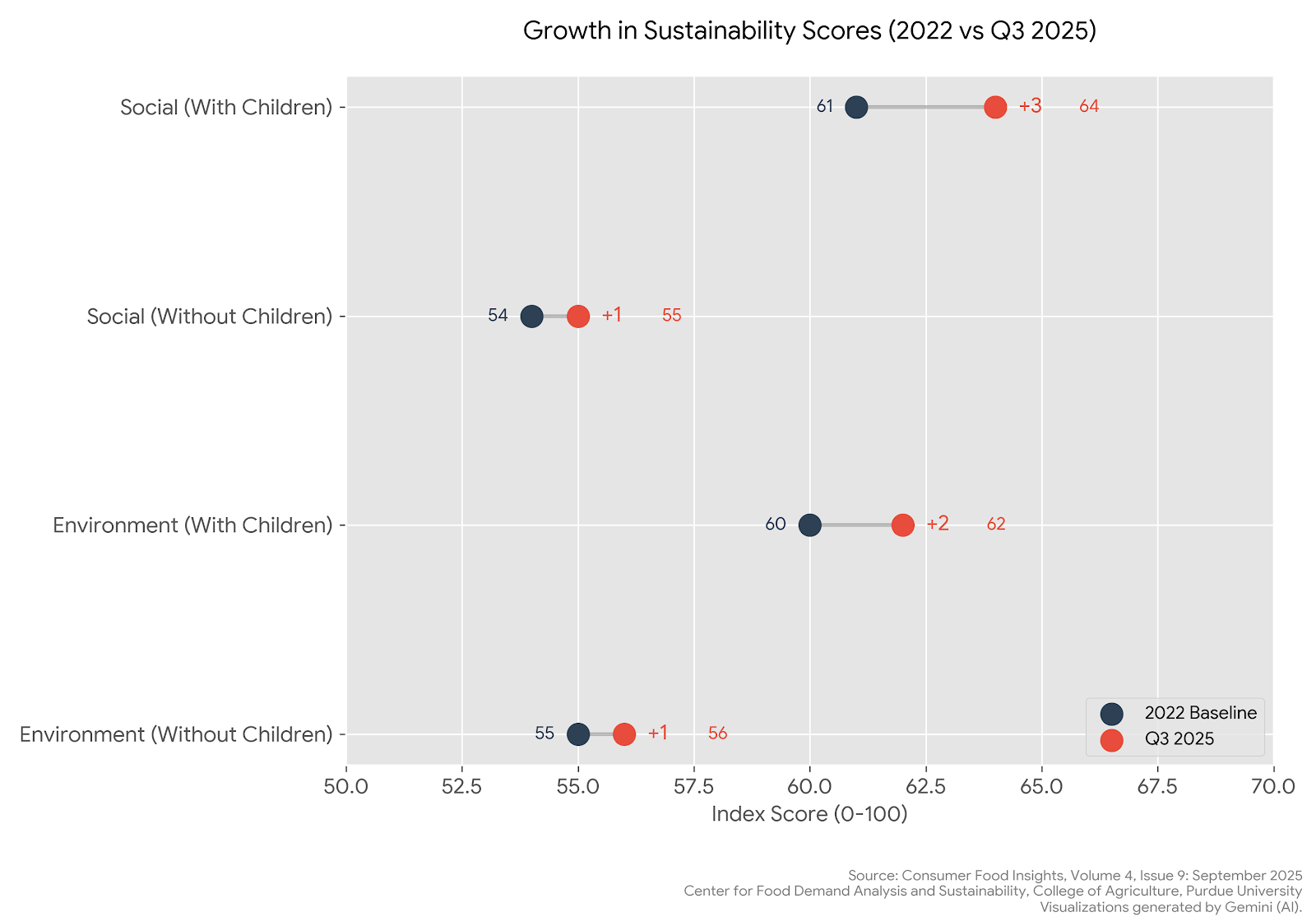
For those without children, their SFP scores on the environment measured 55 out of 100 in 2022 and barely ticked up to 56 as of Q3 2025. For reference, taste is the top SFP factor, scoring 85 out of 100 as of Q3 2025 for those without children.
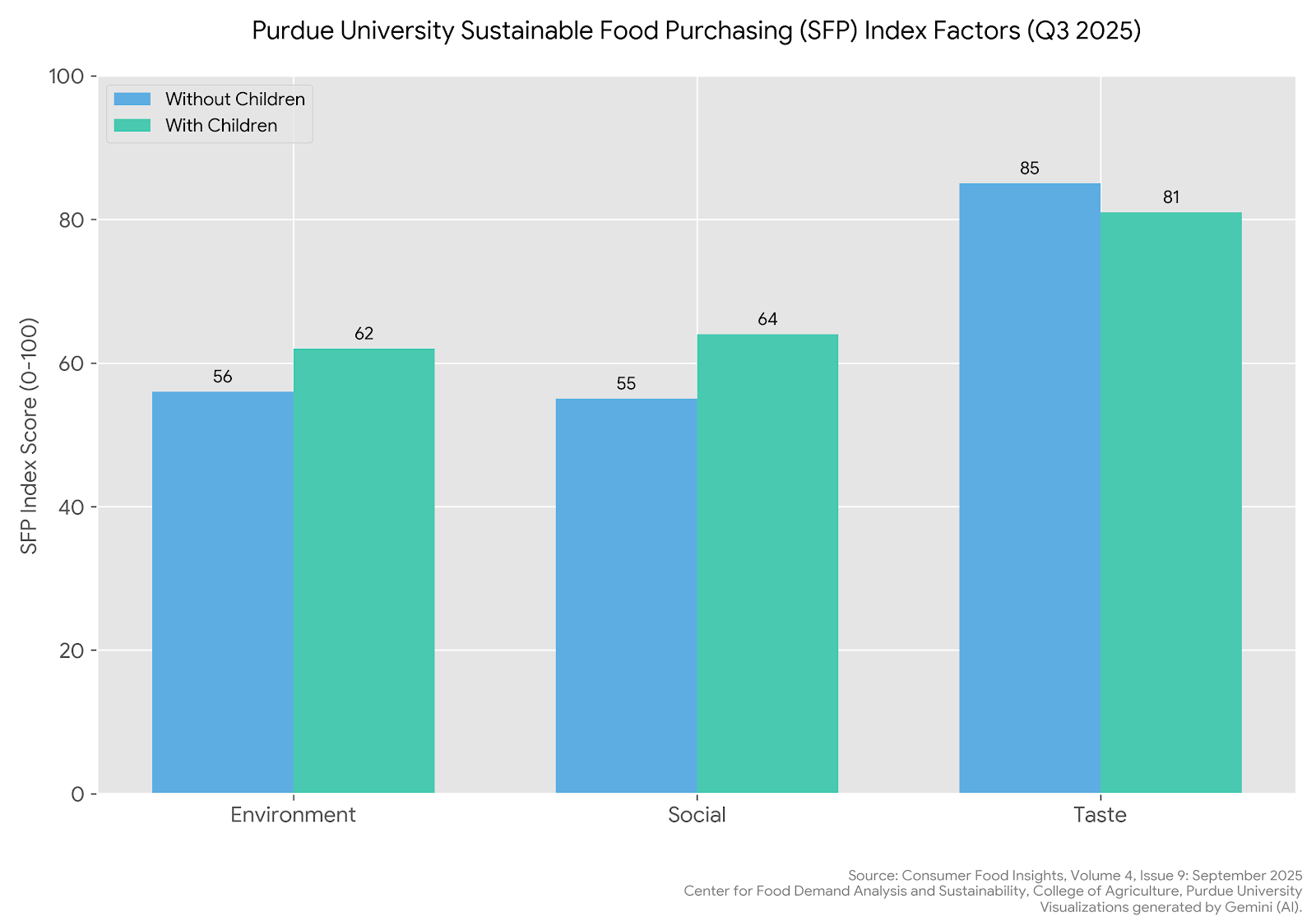
This indicates that food purchases still revolve around basic needs, while sustainability is often a nice-to-have.
During this same 2022-Q3 2025 period, non-parents' social SFP scores similarly went from 54 to 55.
In contrast, parents have shown slightly more growth across these two factors while starting from a higher baseline. In 2022, those with children scored 61 on the social SFP index and 60 for the environment, and that went up to 64 and 62, respectively, through Q3 2025. Taste is still the top factor for parents too, but at a score of 81, there's less of a gap between that and environmental and social factors.
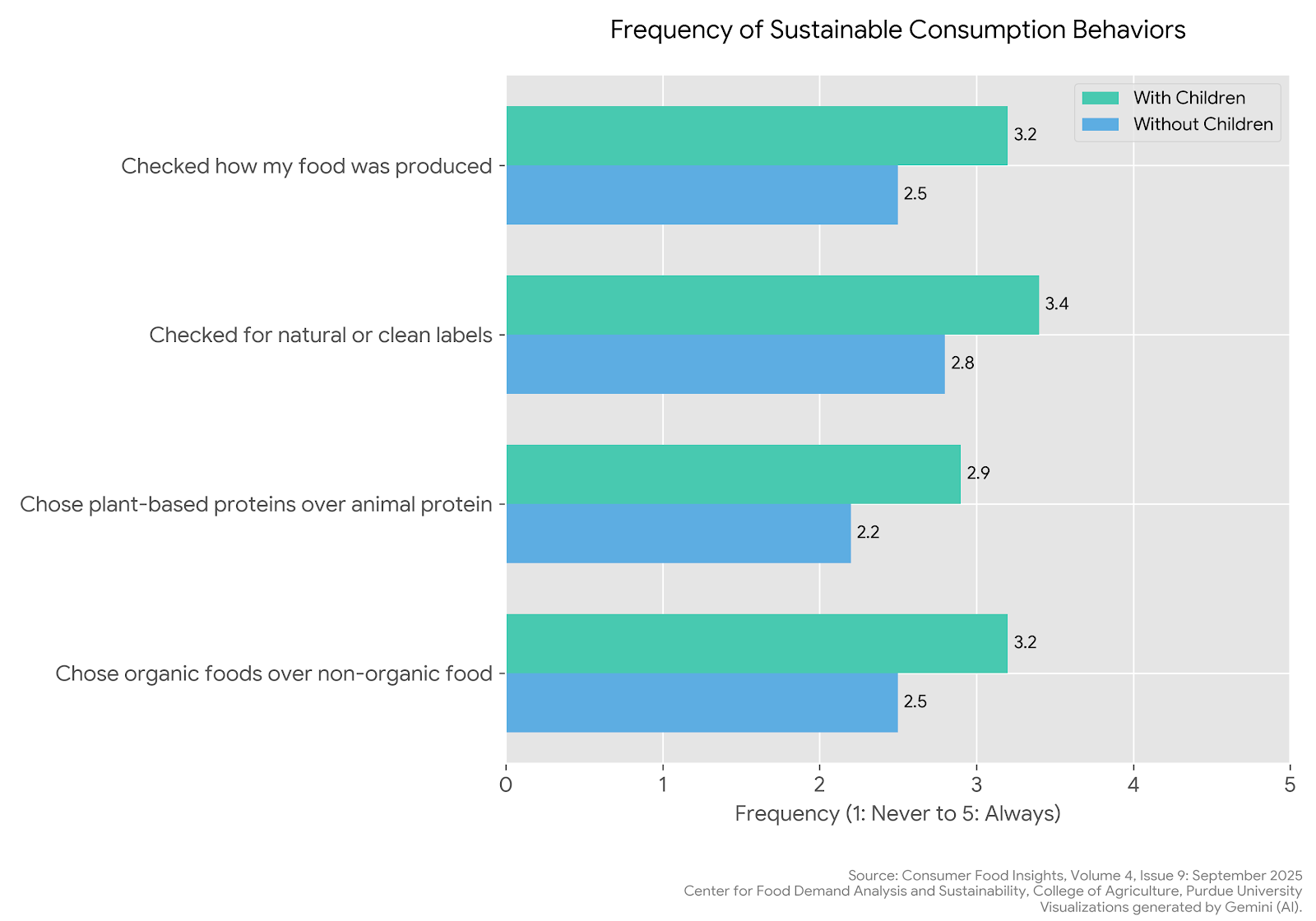
Digging a little deeper into specific behaviors, parents generally report more frequent sustainable consumption habits. Some of the ways these differences play out include:
Interestingly, those without children were slightly more likely to say they took steps to reduce food waste at home, and they were only slightly less likely to say they recycled food packaging. There was a larger gap on composting, but perhaps that has to do with correlations like families having backyard space to home compost.
This potentially indicates that those without children do feel similar to parents about environmental issues such as food and packaging waste, but they perhaps are less motivated to make food purchasing decisions based on other environmental and social attributes that go into making a product.
So, food and beverage brands may need to tailor messaging for parents vs. non-parents.
For parents, emphasizing factors like how your ingredients are farmed sustainably could help, while highlighting recyclable packaging or steps you've taken to reduce food waste could win over non-parents. Ideally, you could tie those messages into benefits for these different consumers, e.g., help parents feel like they're supporting the health of their families and local communities, while helping non-parents feel like your packaging reduces food spoilage so consumers save money.
Before getting to that level of detail, however, it might help to first embrace the overall difference, in terms of parents focusing more on environmental and social factors. For brands trying to tap into the 44% who say they would pay more for food that supports the environment, for example (according to a PwC survey), then making parents your core customer could be a smart move.