Sambazon Moves Toward Reuse at UCLA, But Faces Friction
Sambazon, ASUCLA, and Reusables have partnered on a reusable bowl program, but getting broad adoption is easier said than done.

Switching from single-use packaging to reusable containers sounds like an easy win for companies that prioritize environmental action. But logistically, this change is typically hard to pull off.
Even for motivated brands, getting consumers to change their behavior is easier said than done. You can lead a horse to water, but you can't make it use a Stanley.
This type of dynamic has played out recently for Sambazon.
The açaí brand's sustainability efforts are rooted in its core ingredients, such as with the company's Palm to Palm strategy, which includes sourcing 100% organic and fair trade açaí. The fruit comes from Açaí palms that grow in the Amazon rainforest, which helps prevent deforestation while sequestering carbon. In 2024, Sambazon's 100,000+ fair trade-certified acres sequestered 4.5 million metric tons of carbon, equivalent to one year's worth of driving 3.8 million gas-powered cars.
As a CPG company, waste is also a big sustainability emphasis for Sambazon. The company's goals include making all Sambazon packaging from recycled or plant-based materials by 2030.
But even recyclable or compostable materials can potentially have a net negative impact on the planet, depending on factors like recycling rates and the efforts that go into creating the initial packaging. These options may be better than the status quo, but to minimize environmental degradation, finding opportunities for reusable materials could be even more effective.
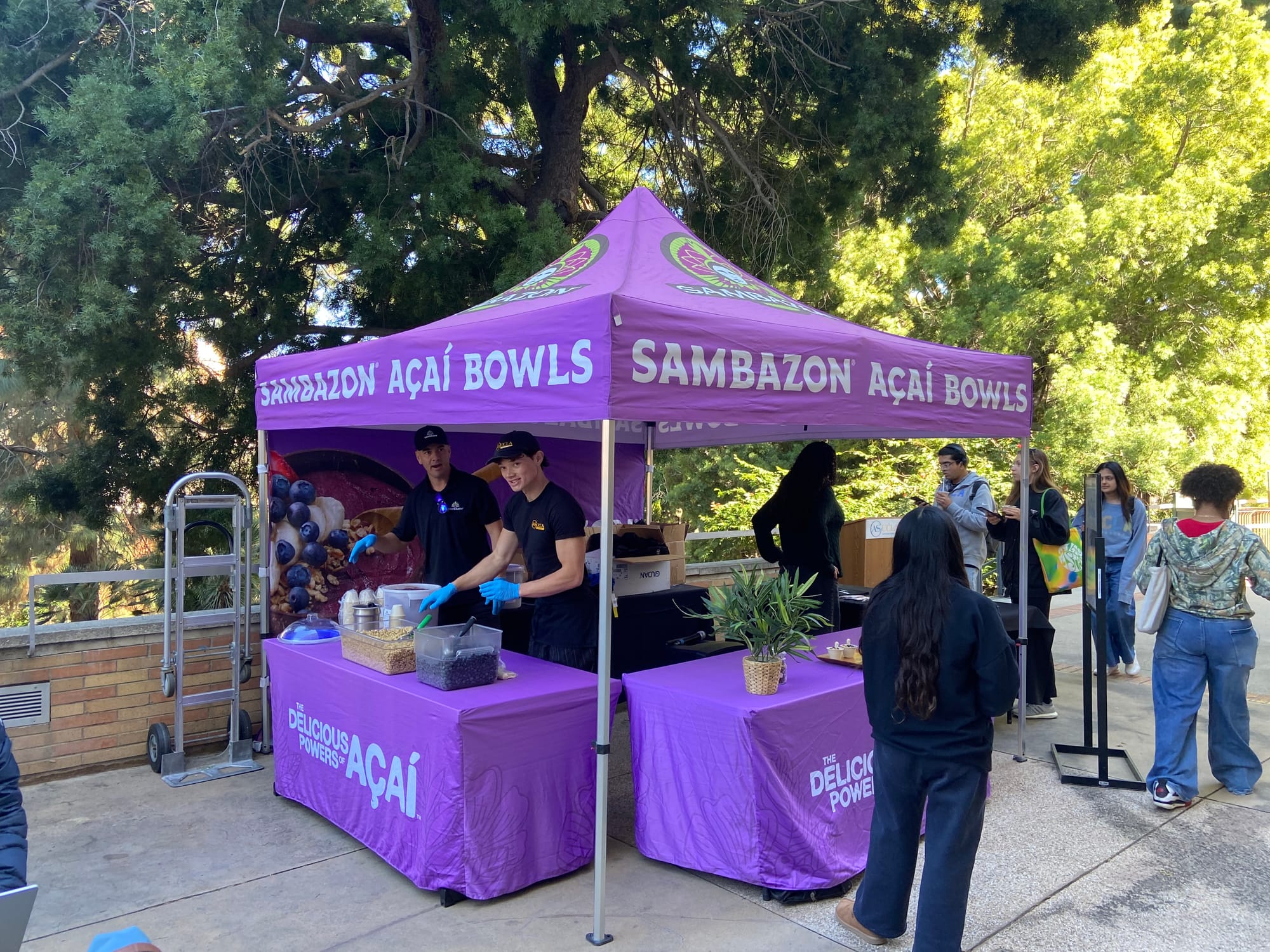
Recently, in January, Sambazon partnered with a company aptly-named Reusables to start offering reusable bowls as an option at Sambazon's UCLA Ackerman Union location. The store, which sells made-to-order açaí bowls, is operated by Associated Students UCLA (ASUCLA). In this licensing agreement, ASUCLA is technically Reusables' customer, but implementing the reusable bowls required tri-party coordination among Sambazon, ASUCLA, and Reusables.
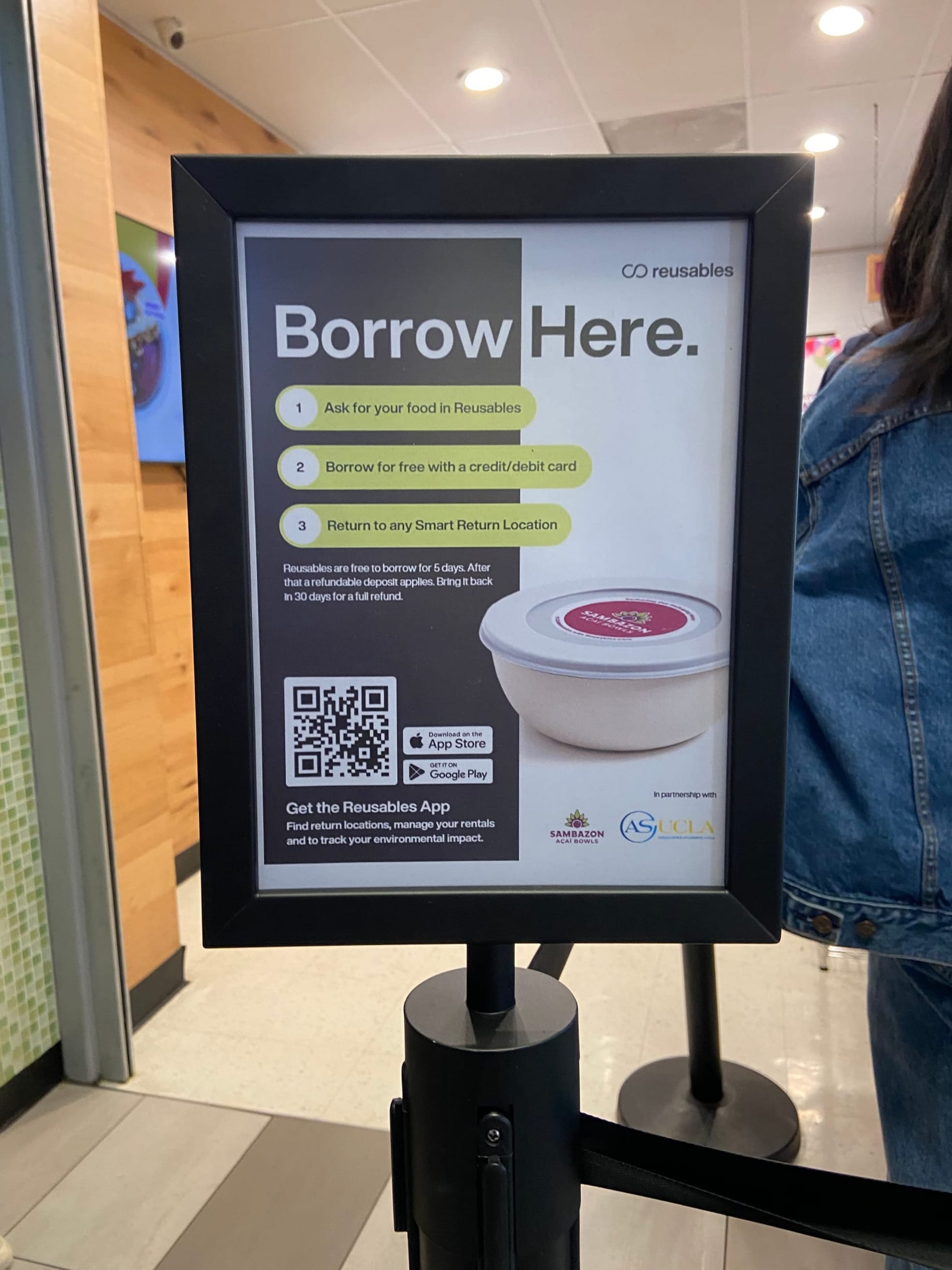
The program works by giving students the option to receive their order in a reusable bowl, which is tracked via a QR code that integrates with the Reusables app. There's no initial cost, but customers then have 30 days to return the bowls to one of several designated Reusables' drop-off locations on campus. If not returned within five days, the borrower incurs a small credit card hold ($5 according to the latest data), but that gets removed if the bowl gets returned within 30 days. From there, the bowls get washed, sanitized and recirculated for the next customers.
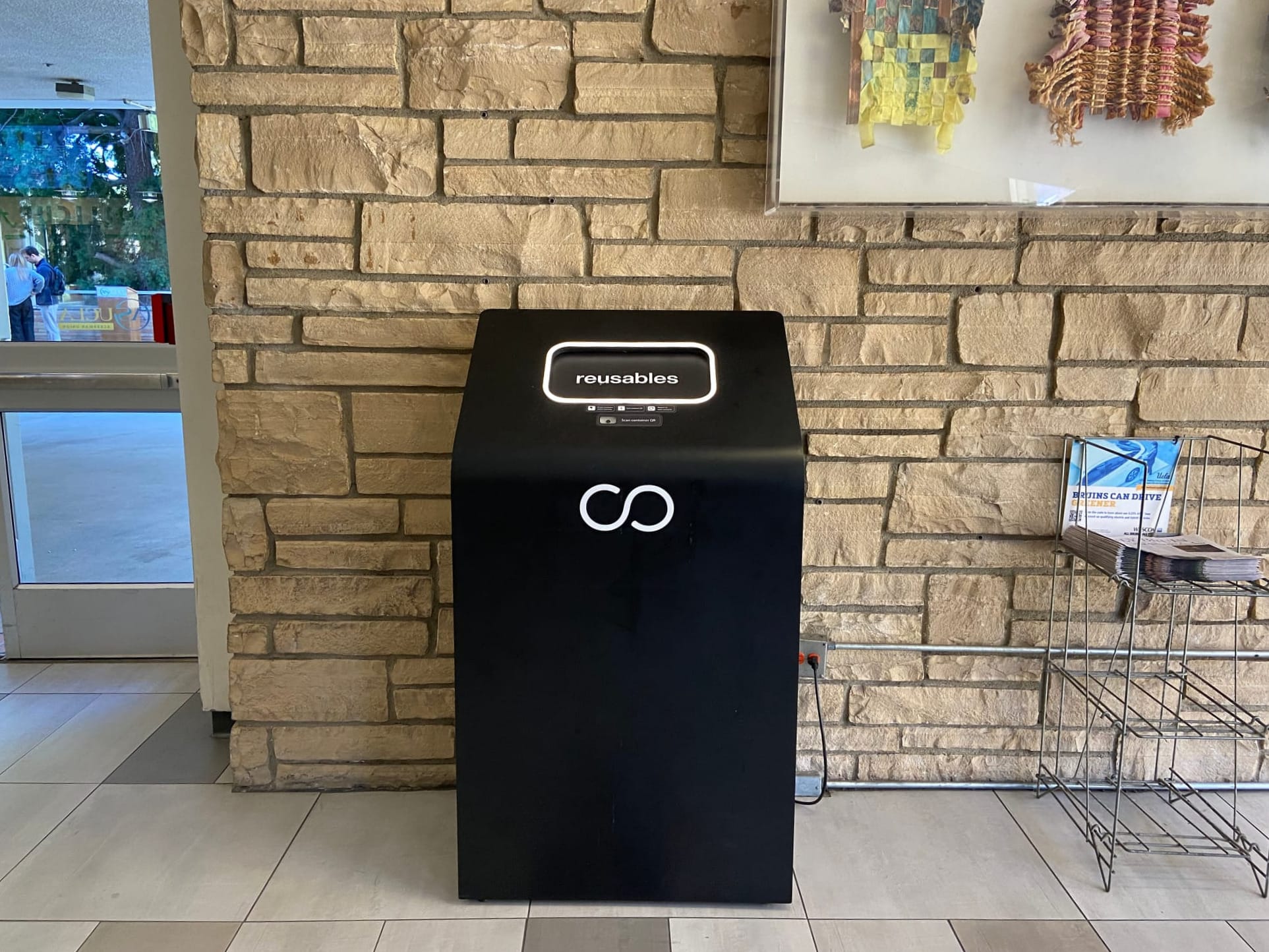
In addition to Sambazon, ASUCLA has implemented the program at four other campus eateries. Since the first of these launches was at the Greenhouse salad eatery in June 2025, ASUCLA has had nearly 9,000 containers checked out by 5,040 users, which equates to about 1,000 pounds of waste diverted and 2 tons of carbon emissions avoided, as of early March 2026.
Granted, this is a relatively small impact, equating to the emissions of less than one gas car driven for a year. But progress often depends on a series of small steps.
Yet even with a captive audience of nearly 50,000 students who are often surrounded by UCLA's substantial sustainability goals, and the fact that ASUCLA was already using compostable bowls at Sambazon, inciting a behavioral shift toward reusable bowls remains tricky.
At the Sambazon-Reusables launch event, for example, some UCLA students told me that while they appreciated the sustainability motives, they preferred compostable bowls to avoid the extra step of having to return the bowls. But if they had some sort of incentive like rewards points or discounts for choosing a reusable bowl, they'd be more open to it.
Some students also noted that they've made other types of reusable shifts in the past.
"I bought a Hydroflask a while back. I used to just buy [single-use] water bottles, but cost-wise it's more efficient just to carry one around, and it's pretty cool that when I walk around campus they have the water fountains that say this fountain saved this many plastic bottles," said Edward Lee, a junior who's a history and poli sci major.
So, while reusable bowls may seem like a hassle now, they could become more commonplace, especially as the messaging and infrastructure get refined. And there are some students willing to take the extra steps, though the easier the logistics can be, the more probable it seems that students would adopt the program.
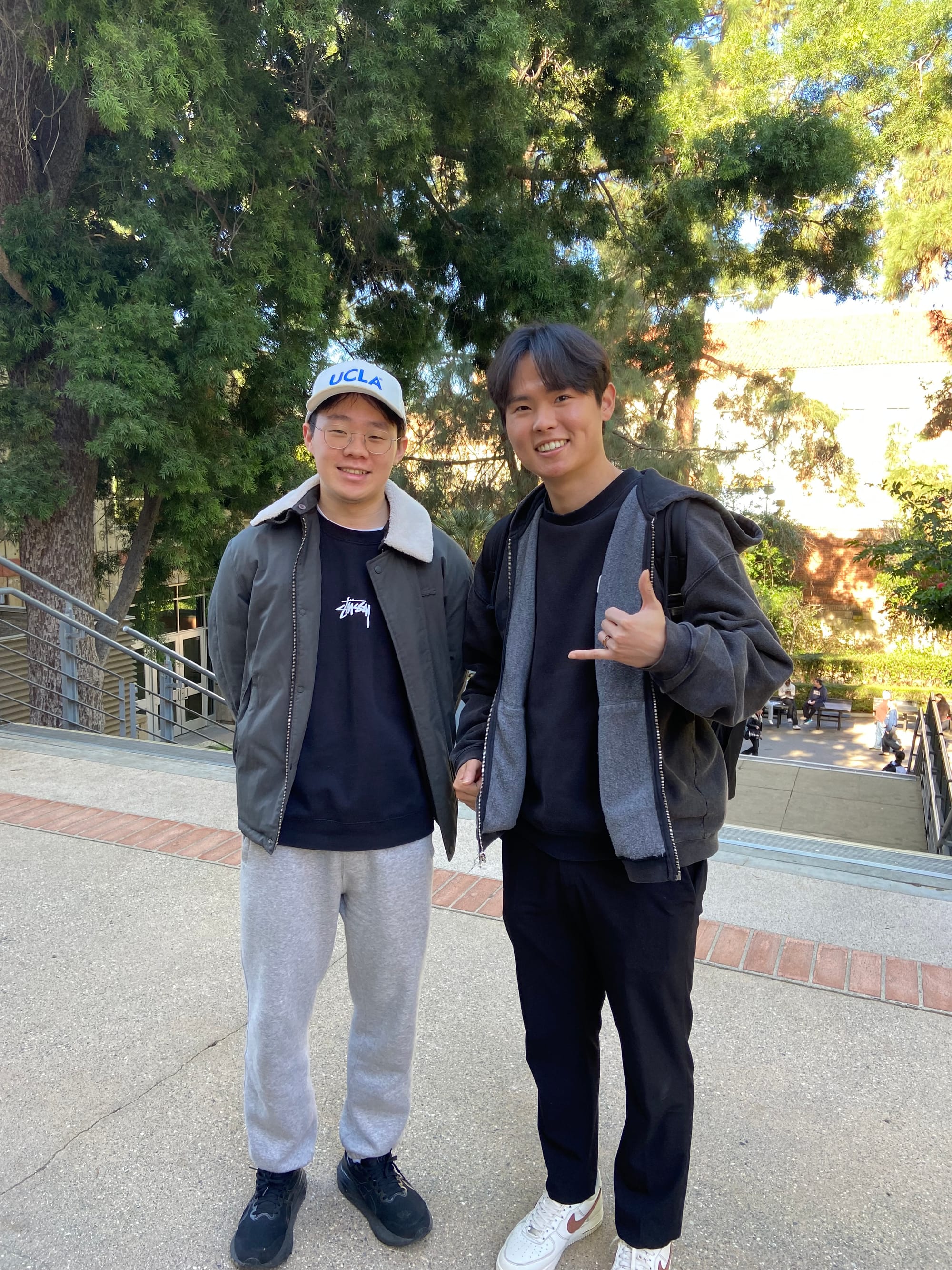
"If it's for the environment, I would rather use that reusable bowl, " said Jimmy Kim, a second-year biology major. However, he acknowledged that having to potentially return to the student union or the nearest drop-off bin could be a roadblock, so the more return receptacles, the better.
But even at this early stage, some students were willing to take the extra steps to try out the reusable bowls, furthering their sustainability efforts they've already been trying to implement on campus, like sorting waste.
"There's just so much waste on the campus. And pretty much every day I'm eating out and creating waste. So it definitely feels a lot better to use something reusable," said Eliana Davis, a third-year cognitive science major.
For brands like Sambazon and partners like ASUCLA, tapping into this type of sentiment can help achieve sustainability goals, but it's generally not something that can be flipped on like a light switch. Brands need to be willing to put in the work to ensure the logistics and education are in place to make reuse the easy, commonplace choice, rather than something that only the most ardent environmentalists support.